White Mold in 2026: What We’re Seeing Across the Northern Region
The 2026 growing season has brought a mix of conditions across northern Minnesota, northern North Dakota and Manitoba. Moisture earlier in the season helped build strong soybean canopies, while hotter and drier weather later in the summer kept white mold from becoming as widespread as we saw in 2025.
But that doesn’t mean white mold isn’t out there.
White Mold Is Still Showing Up
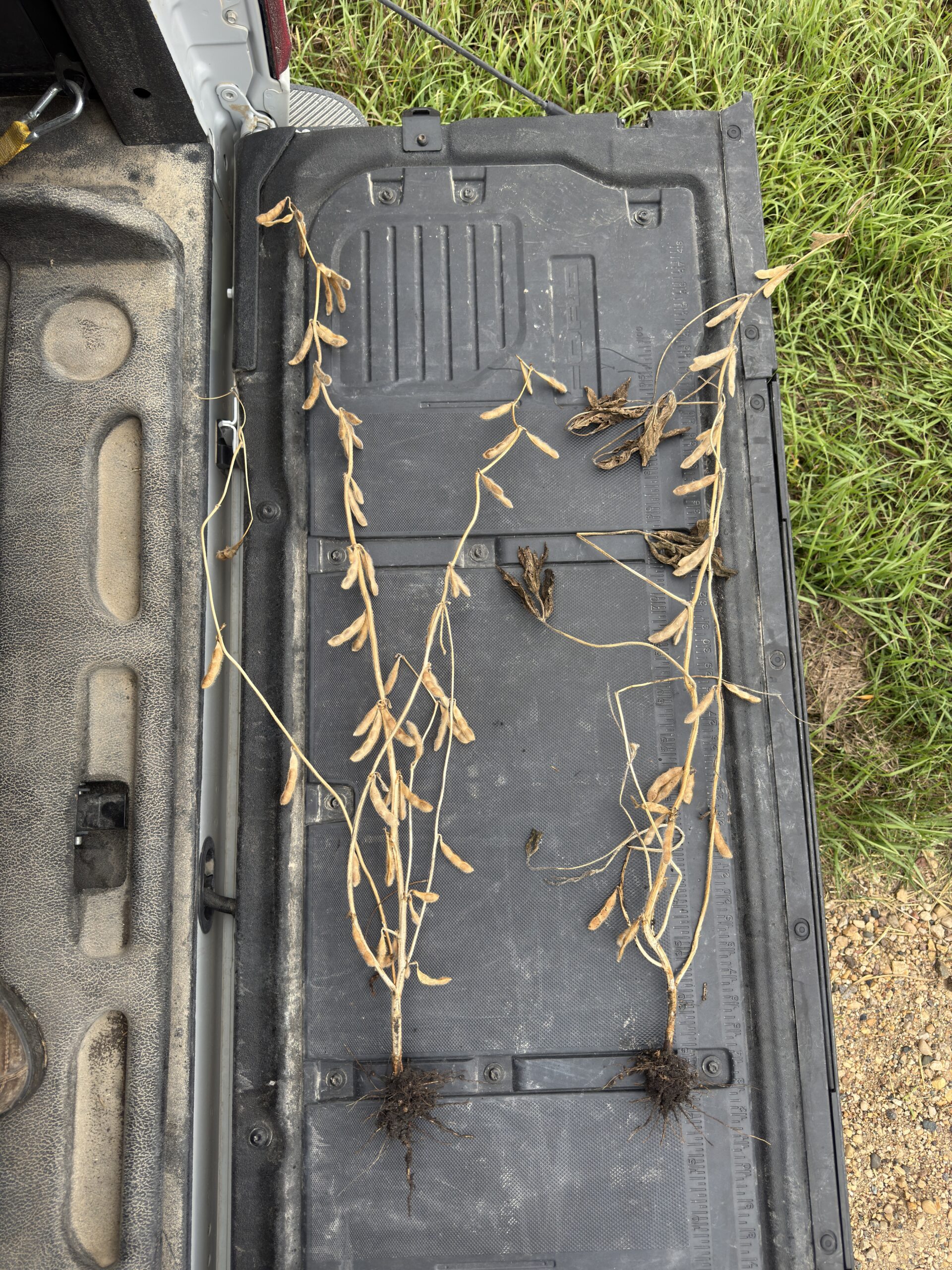
In northern Minnesota and parts of Manitoba, we’ve found fields where soybeans were infected later in the growing season. From the road, these later infections may not always look significant. Once you get into the field and start pulling plants, however, the impact becomes easier to see.
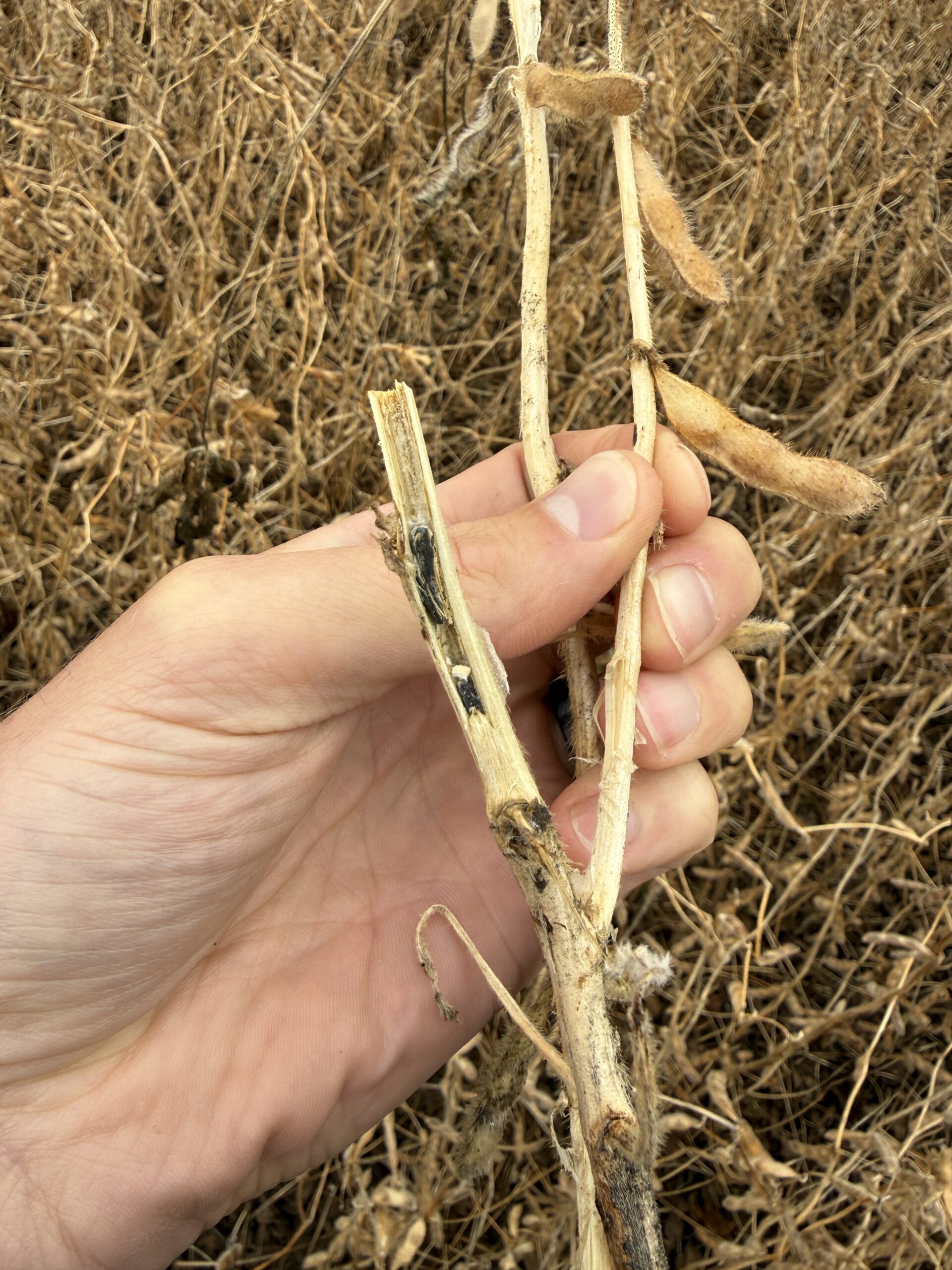
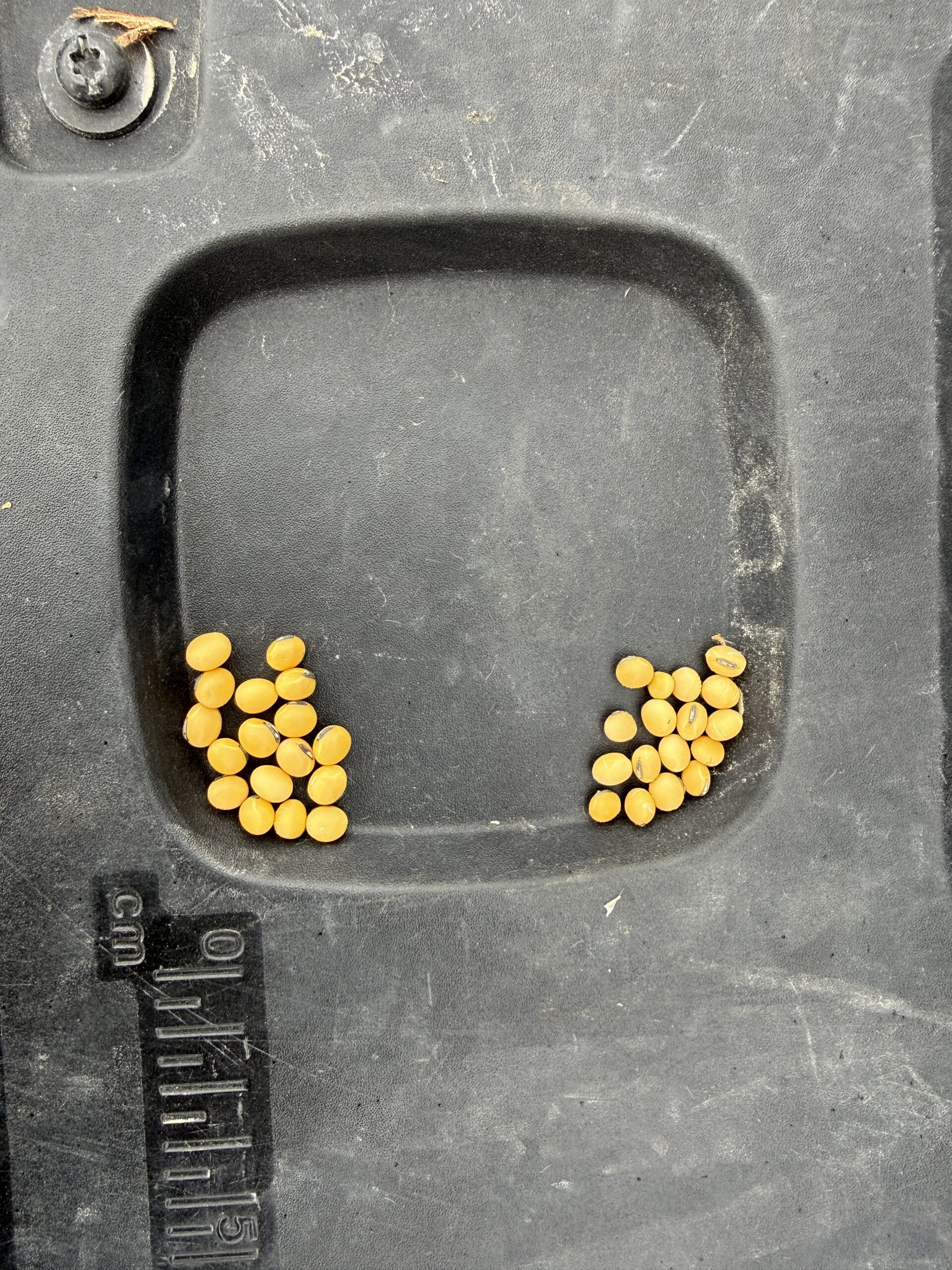
When infected stems are split open, sclerotia can be found inside. Affected plants are also showing fewer pods and smaller seed size. Even though these plants made it fairly late into the growing season before infection became apparent, there can still be an impact on yield.
A Different Year Than 2025
Overall, white mold pressure hasn’t been nearly as widespread or severe across the region as it was in 2025.
Instead, what we’re seeing this season is much more variable. Pressure can change from field to field and even from one area of a field to another.
Rainfall, canopy density and how long moisture remained in the canopy all played a role in where disease developed.
That variability is also why scouting remains important, even in a year when white mold pressure appears relatively low across the region.
White Mold Doesn’t Have to Take Down an Entire Field to Cost Yield
One of the biggest takeaways from the 2026 season is that white mold doesn’t have to take down an entire field to cost yield.
Later infections can be easy to overlook, especially when symptoms aren’t widespread or immediately visible from the road. But when you take a closer look at affected plants, the impact on pod development and seed size can become much clearer.
Understanding where disease showed up this season can also help build a better picture of white mold pressure across the region and inform future management decisions.
Help Us Track White Mold and SDS
If you’re seeing white mold or sudden death syndrome (SDS) in your fields this season, we want to hear about it.
Heads Up has created a disease tracking map to help document where white mold and SDS are being reported across the Midwest. Submitting a report takes about 30 seconds, and every submission helps build a more useful picture of disease pressure across the region.
Submit a disease report:
https://tally.so/r/obJz5X
View the disease tracking map:
https://map.soybeanwhitemold.com/
By sharing what you’re seeing in your fields, you can help create a resource for growers, agronomists and others across the industry to better understand the impact and distribution of white mold and SDS.
More From Heads Up
Fill the Planter and Go
Fill the Planter and Go with Heads Up Soybean Seed Treatment Matt Oehmichen closes his...
Here Today, Still Here Tomorrow
Here Today, Still Here Tomorrow Introduction: Biologicals Are a Crowded Category Over the last...
Why this North Central Illinois Seed Dealer Makes Heads Up® Part Of His Standard Treatment Package
Why this North Central Illinois Seed Dealer Makes Heads Up® Part Of His Standard Treatment...