
The 1st EPA-registered seed treatment to helps growers be prepared against SDS in soybeans.

Key Benefits
Fusarium virguliforme fungus causing Sudden Death Syndrome is one of the most destructive soybean diseases found in the north-central U.S. It attacks early in the growing season, but infection is often impossible to spot until the R2-R4 soybean growth stages. Due to this, applying a disease defense plan before you plant seeds is the most effective soybean SDS management strategy.
Heads Up® seed treatment gives you this advantage; inducing crop defense right from germination, against the worst of SDS and other devastating fungal pathogens. Its performance is proven through more than two decades of testing, it is compatible with other seed treatments, and there are no restrictions between treatment and planting.
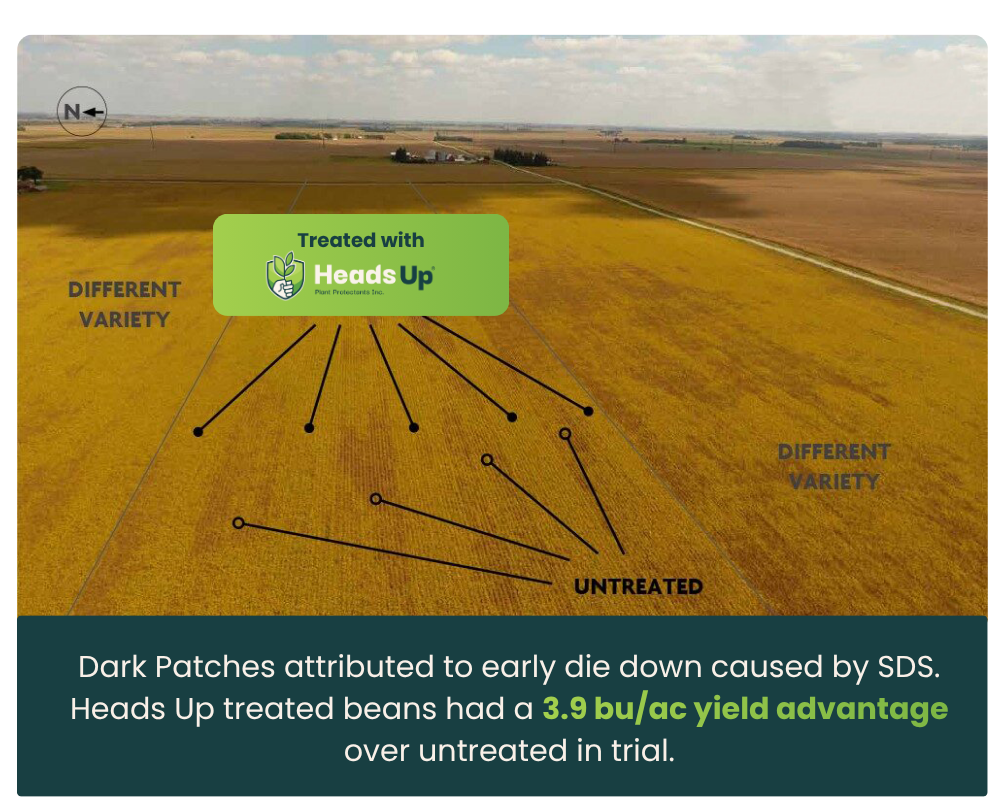
Clear lake, IA
Learn More About Soybean Sudden Death Syndrome (SDS)
Soybean Sudden Death Syndrome (SDS) is a destructive fungal disease that can reduce soybean yields by up to 50%.
Understanding Soybean SDS
- Pathogen: SDS is caused by the soil-borne fungus Fusarium virguliforme, which thrives in warm, wet soil conditions.
- Disease progression: The fungus attacks roots early in the season. Foliar symptoms, including yellowing between leaf veins (interveinal chlorosis) and leaf cupping, typically appear in late July or mid-August.
- Impact: The fungus produces toxins that move through the plant, causing premature death and significantly reducing yield potential.
Management Strategies
- No rescue treatments: Once symptoms are visible in the canopy, it is too late to treat the disease with foliar products.
- Heads Up® seed treatment: Heads Up induces systemic acquired resistance (SAR), triggering defense-related gene expression from planting through harvest to help reduce SDS incidence and severity.
- Field trials: Data from the Iowa Soybean Association and University of Minnesota Extension demonstrate that Heads Up can reduce disease incidence and help preserve yields compared with untreated seeds.
Best Practices
- Combine variety selection with seed treatments.
- Consider longer crop rotations in fields with a history of SDS.
- Address related issues, such as soybean cyst nematode (SCN), which often correlates with SDS.
- For severe cases, pair Heads Up with a specialized fungicide seed treatment to use two distinct modes of action.

Don't Plant Without It
Ask your seed dealer for Heads Up® or find a retailer near you.